Review of the series “Merguez Got Rich”: Michelle Pfeiffer shines in Apple’s gentle comedy about sex work
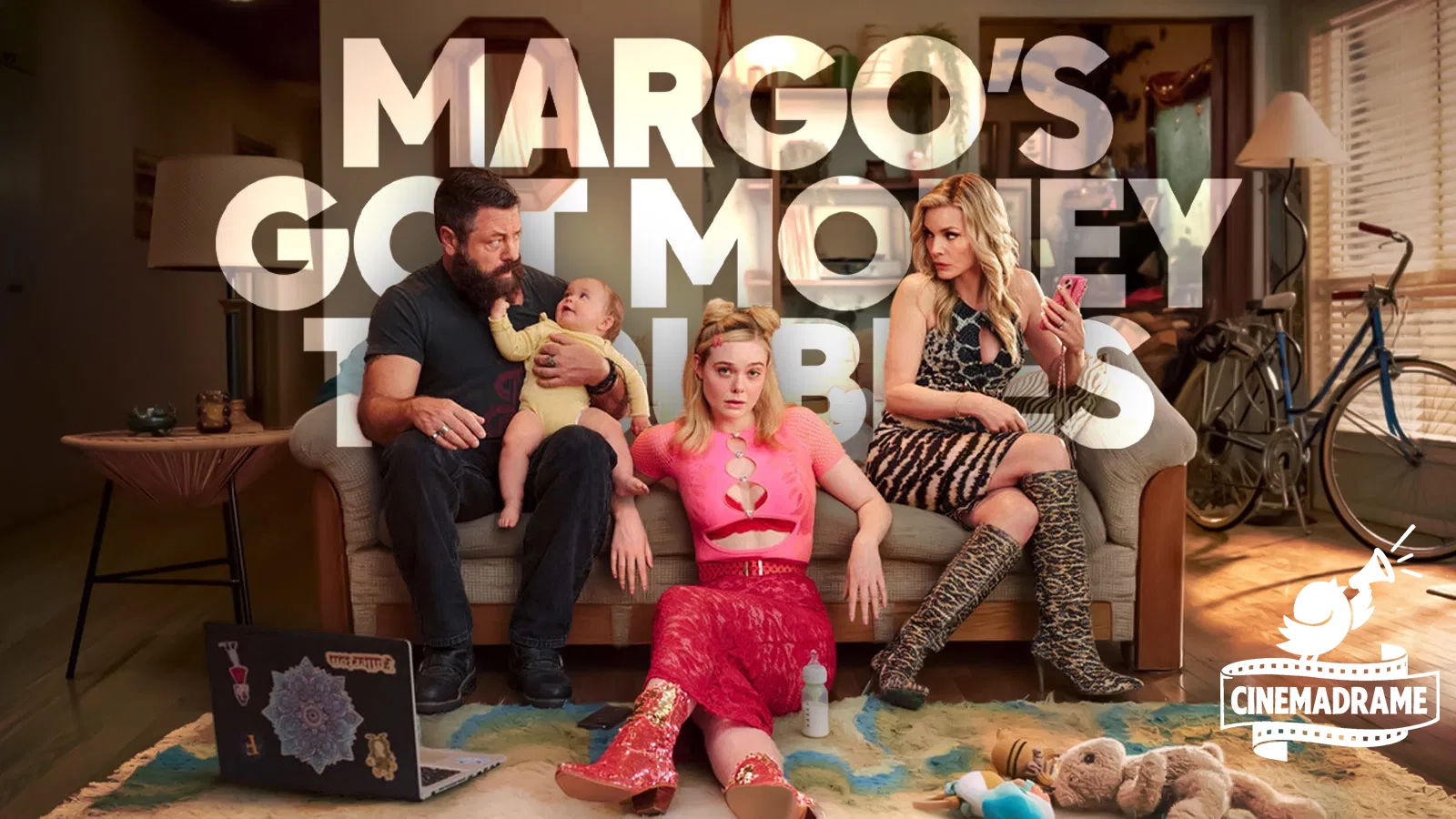
According to the CinemaDrame News Agency, this series—based on the novel by Rufi Thorpe—recalls David E. Kelley’s return to the familiar territory of his earlier works. It follows a young woman who dreams of becoming a writer, but an unexpected pregnancy completely disrupts her life. Without a job and facing serious financial limitations, she turns to OnlyFans to support her living expenses—a creative space that may either save her future or destroy it.
Above all, the series is about acceptance. In terms of its message, David E. Kelley’s latest work tries to convince the audience that a woman can simultaneously embody two seemingly contradictory historical roles: a good mother and a sex worker.
However, while Margo (played by Elle Fanning) publishes content on OnlyFans to pay for her baby’s expenses—first in the form of humorous writings, then performative pieces, and eventually a green-skinned character called “The Hungry Spirit”—we are also expected to accept that we are watching a fictional story. It is a narrative rooted in reality, but still shaped and controlled by writers, and therefore somewhat safe and guided. Margo is not going to enter this world on Monday and return to waitressing by Friday. She gains followers, earns money, and introduces us to an online world that is still unfamiliar to many Apple TV viewers.
Stereotypes are used without restraint in the series. The audience’s emotions are deliberately manipulated, and tension is increased in a predictable rhythm so that viewers are not afraid of watching a comedy that only hints at danger but never descends into deep darkness. The series itself, aware of these limitations, sometimes explains them very directly—often through the protagonist’s inner narration—as if it wants these constraints to be accepted in advance.
Some viewers will likely not be comfortable with this approach and may prefer something that breaks away from clichés. This reaction is understandable. However, in my experience, the series manages to strike a relative balance between message and storytelling, turning its controlled simplicity into something pleasant rather than irritating. Once you engage with it, the show becomes more appealing than it initially seems, and Michelle Pfeiffer’s presence plays a major role in this charm.
From the outset, it is clear that the series is designed for awards season—from its spring release timing and well-known production team to its cast of prominent actors and emotionally calculated roles designed to attract both audiences and voters.
In Kelley’s writing, the protagonist Margo is a smart but flawed girl. She usually sees the consequences of her actions, but is not always trapped by stereotypes. Sometimes her excessive trust in others harms her—such as with her unintended pregnancy—and sometimes that same trust benefits her, especially when she believes in herself.
After about three introductory episodes, she suddenly enters OnlyFans. Finding a job is difficult for her, both because of her incomplete education and her responsibilities as a mother. She grew up in an environment where her mother told her that her only strength was her appearance, and her roommate lives in a world of creativity and performance. In such circumstances, using her writing skills and imagination to earn money online becomes both unexpected and believable.
This part of the story takes a relatively open approach to sex work. In her interactions with followers, creativity and character-building are emphasized, and the process of constructing an online identity is portrayed as a real project. For the protagonist, this path is both labor and discovery.
Of course, not everything is light and entertaining. The series also touches on heavier themes. Margo’s father is a former wrestler who has become addicted to painkillers due to multiple injuries. Her mother hides her daughter’s relationship from her partner, a religious man who may not accept her lifestyle. The online space is also shown as potentially dangerous, filled with threats, exposure, and harm for content creators.
The supporting cast also delivers strong performances, and the roles avoid falling into clichés. Michelle Pfeiffer, in the role of the mother, has a decisive presence; a character who could have been purely stereotypical but gains depth through her performance. She portrays concern, anger, and confusion in a way that feels entirely believable.
The mother is neither happy nor fully opposed to her daughter’s choices, but her reactions contain multiple emotional layers—from disappointment to fear of the future, and even anger toward a world that can be cruel to women, especially single mothers.
She also does not want to resume the role of primary caregiver, having just finished raising a child herself. These tensions allow the actress to display a wide emotional range, from meaningful silences to emotional speeches.
Ultimately, although the series does not always remain strictly realistic, it tries to show the audience that sometimes one must move beyond initial judgments and consider other possibilities. Even if the story does not feel entirely realistic or likely, its goal is to offer a different perspective. The lead actors—especially Pfeiffer and Fanning—make the experience easier and more enjoyable to follow.
Rating: B